
Shipping a car in the United States in 2026 commonly costs somewhere between several hundred dollars for a short regional move and around $1,500 to $2,000 for a long cross-country shipment.
Open transport is the cheaper option. Enclosed transport can cost 40% to 60% more, depending on the route, vehicle, timing, and carrier availability.
There is no single national rate per mile. Current quotes collected show why. Open transport for a midsize sedan averaged $946 for about 600 miles, $1,331 for 1,200 miles, and $1,579 for a 2,800-mile Brooklyn to Los Angeles route. The price per mile falls as the trip gets longer, even though the final bill increases.
Choose the Right Transport Service and Calculate the Full Cost Before Booking
A low quote is not useful if another $300 or $500 appears when the pickup date gets close.
Before booking, the first job is to choose a properly registered transport service and find out exactly what the quoted price includes.
A good estimate should account for the pickup and delivery locations, vehicle make and model, vehicle condition, transport type, requested dates, and any additional services.
Services such as Navi Auto Transport are great option for drivers who want more pricing transparency. Navi presents its pricing around live carrier rates, states that there are no hidden fees, and requires customer approval before a revised price becomes binding.
Before comparing quotes, calculate the expected total using the same set of costs:
- base transportation price
- open or enclosed carrier
- vehicle size and weight
- running or non-running condition
- standard or expedited pickup
- pickup and delivery location
- optional additional insurance or protection
- charges for personal items if the carrier permits them
- broker, cancellation, or other service fees listed in the agreement
Ask for the total in writing. A quote of $850 and a final invoice of $850 are very different from an $850 estimate that can become $1,200 once a carrier is assigned.
What Car Shipping Costs Look Like in 2026?
Forbes collected more than 100 current car shipping quotes and found substantial differences by distance, company, and transport method.
| Approximate Distance | Example Route | Average Open Transport Quote | Approximate Cost Per Mile |
| 600 miles | Brooklyn to Charlotte | $946 | $1.58 |
| 1,200 miles | Brooklyn to Kansas City | $1,331 | $1.11 |
| 2,800 miles | Brooklyn to Los Angeles | $1,579 | $0.56 |
Those figures should be treated as examples, not fixed national prices. A shipment between two major cities on a busy trucking corridor can cost less than a shorter move involving a remote pickup or difficult delivery point.
Move.org reported an average of about $1,128 for car shipping across the continental United States in its 2026 analysis. A short open-carrier move of around 100 miles can be near $400, while enclosed cross-country shipping can approach $2,000 or more.
Why Short Car Shipments Cost More Per Mile?

Shipping a vehicle 200 miles does not cost one tenth as much as shipping it 2,000 miles.
The driver still has to reach the pickup location, inspect the vehicle, load and secure it, handle paperwork, unload it, and coordinate both ends of the shipment. Those tasks exist even on a short route.
Current industry pricing collected by Forbes places many short open-carrier trips under 200 miles above $2 per mile. Rates decline considerably on long-distance routes because fixed loading and scheduling costs are spread across more miles.
For budgeting, total route price is usually more useful than trying to find one universal cost-per-mile figure.
Open Transport Is the Cheapest Choice for Most Cars
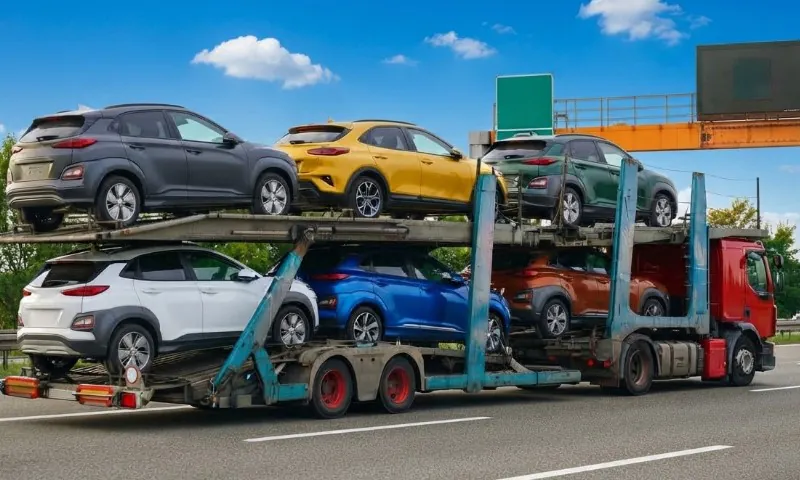
Open transport is the carrier type most people recognize from highways. Several vehicles are loaded onto an open trailer and transported together.
It is normally the least expensive option because open carriers are widely available and can move more vehicles at once.
Forbes found an average open-transport quote of $1,053 in its 2026 sample for a roughly 600-mile sedan shipment, although individual quotes ranged from $736 to $1,500.
A normal daily driver, family sedan, crossover, or ordinary SUV generally does not need enclosed transportation unless the owner specifically wants the additional protection.
Enclosed Transport Can Add 40% to 60%

An enclosed carrier protects the vehicle from rain, road debris, dust, and direct exposure during transportation. The trailer carries fewer vehicles, so every vehicle uses a larger share of the available capacity.
Current Forbes research puts enclosed transport around 40% to 60% above open transport per mile in many cases.
Enclosed shipping is most useful for:
- rare classic cars
- exotic vehicles
- high-value luxury cars
- restored vehicles
- cars with very low ground clearance
- vehicles being transported to auctions or major shows
Paying several hundred dollars more can be reasonable when the vehicle itself is worth tens or hundreds of thousands of dollars.
Vehicle Size and Weight Affect the Quote
A full-size pickup takes more trailer space than a compact sedan. It also adds more weight to a carrier that must remain within legal operating limits.
SUVs, pickup trucks, vans, lifted trucks, and heavily modified vehicles can therefore cost more to ship.
Move.org has found increases of around $150 when moving from one general vehicle-size class to another in some quote comparisons. The exact difference varies by carrier and route.
Electric vehicles can also produce higher quotes in some cases because many EVs are substantially heavier than similar gasoline vehicles.
There is no universal EV surcharge across the industry, so vehicle-specific quotes are more useful than assuming every electric car costs a fixed amount extra.
A Non-Running Car Costs More to Move
View this post on Instagram
A car that starts, steers, rolls, and brakes can usually be driven onto the transporter. A non-running vehicle may require a winch or other loading equipment.
That extra work usually increases the quote.
Current pricing examples put common inoperable-vehicle surcharges around $140 to $200, although difficult vehicles can cost more.
Tell the transport company about the condition before booking. A car described as operational that will not start when the truck arrives can create a new charge, delay the shipment, or make the assigned carrier unable to load it.
Pickup Location Can Change the Price More Than Expected
A 1,000-mile route between two major metropolitan areas is usually easier to fill than a shipment beginning or ending far from major highways.
Carriers earn money by building efficient loads. A driver may have several vehicles headed along the same interstate corridor. Driving an extra 100 miles into a rural area for one vehicle uses fuel and working time without necessarily producing another paying load.
Flexible pickup near a major city or highway can sometimes reduce the cost. Door-to-door service is still common, but a large transporter may not be able to enter a narrow residential street, gated community, steep driveway, or street with low trees and local truck restrictions.
In those cases, pickup normally moves to a nearby parking lot or another location where the truck can safely load the vehicle.
Shipping Dates Can Add Hundreds of Dollars
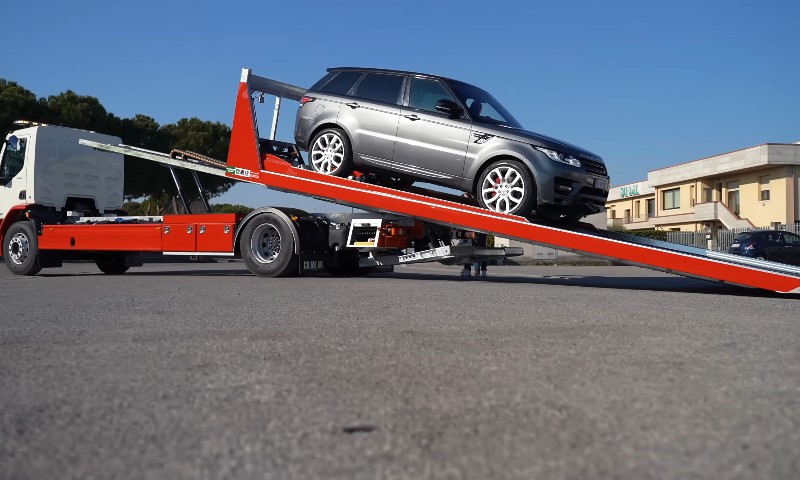
Car transport runs on available truck capacity. Giving the broker or carrier more flexibility can make it easier to match the vehicle with a truck already traveling the route.
Last-minute shipping reduces those options.
A request for pickup tomorrow can cost considerably more than a booking made one or two weeks ahead. Guaranteed one-day or two-day pickup is also commonly sold as a paid upgrade.
Season affects capacity as well. Spring and summer bring heavier moving demand, while seasonal migration between northern states and Florida or Arizona can put intense pressure on particular routes at certain times of year.
Do Not Treat the Cheapest Quote as the Best One
A quote far below every other offer deserves another look.
Imagine five companies quote the same shipment at $1,050, $1,100, $1,125, $1,180, and $650. The $650 offer may be a genuine opportunity, but it may also be too low to attract a carrier willing to take the vehicle.
If no driver accepts the load, the customer can receive a call shortly before pickup asking for more money.
Ask these questions before booking:
- Is the number a quote, estimate, or guaranteed total?
- Is the broker fee already included?
- Is a deposit required?
- Can the transport price change after booking?
- Who must approve a price change?
- Can I cancel if I reject a higher carrier price?
- What cancellation fee applies before and after carrier assignment?
- Are there separate charges for door-to-door delivery?
The answer should be visible in the written agreement, not only explained during a sales call.
Understand the Difference Between a Broker and a Carrier
A carrier owns or operates the truck that physically moves the vehicle. A broker arranges transportation by matching customers with carriers.
Both models are common in auto transport. Many large consumer-facing shipping companies are brokers rather than trucking fleets.
The Federal Motor Carrier Safety Administration advises consumers to check which type of company they are dealing with and verify interstate auto transport brokers and carriers through FMCSA registration records.
Look for an MC number and USDOT information when applicable. A professional website and a low quote are not substitutes for federal registration.
Check Insurance Before the Car Is Loaded
Do not assume that the word insured means every type of damage is fully covered.
Ask for details of the carrier policy after a carrier has been assigned. Check coverage limits, exclusions, deductibles, and the claims process.
FMCSA requires interstate for-hire property carriers to maintain specified levels of public liability coverage depending on vehicle size and operation.
FMCSA insurance filing records can also help confirm that required federal filings are active.
Take clear photos of the car immediately before pickup. Photograph every side, the wheels, glass, roof, bumpers, and any existing scratches or dents.
The driver should inspect the vehicle and record its condition on the Bill of Lading. Repeat the inspection at delivery before signing the final condition report.
Can You Put Personal Items Inside the Car?
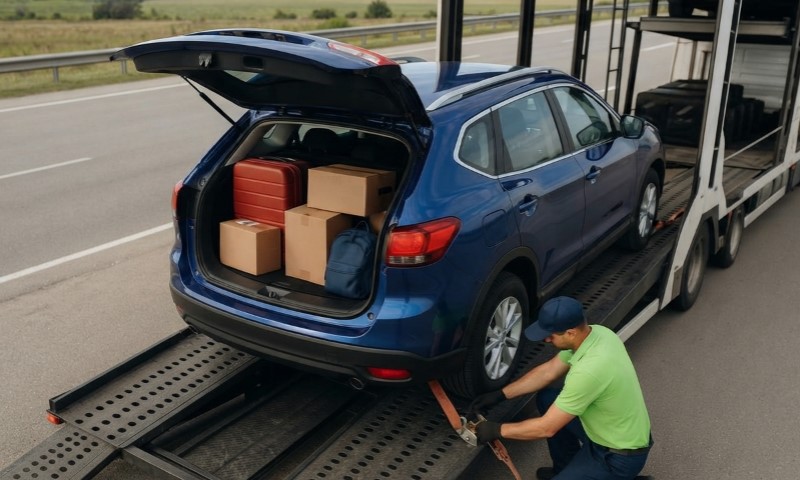
Rules vary between transport companies and carriers.
Some allow a limited amount of personal property, commonly around 100 pounds, stored below the window line. Others restrict personal items more heavily or charge for additional weight.
Personal belongings also may not receive the same protection as the vehicle itself. Ask about the rule before packing the car.
Do not load the vehicle with valuable electronics, important documents, jewelry, cash, firearms, prohibited items, or anything that would create a serious loss if it disappeared during transportation.
Estimate Your Own Car Shipping Budget
A realistic budget can be built before requesting quotes.
Start with the distance and an open-carrier price that fits the route. Then add only the costs that apply to your vehicle.
| Cost Item | What Can Increase the Price? |
| Base transport | Long distance, difficult route, limited carrier availability |
| Enclosed transport | Often 40% to 60% more than open transport |
| Large vehicle | SUV, truck, van, modifications, extra weight |
| Non-running vehicle | Winch or special loading equipment |
| Expedited pickup | Narrow pickup window or urgent dispatch |
| Remote location | Extra carrier mileage away from common routes |
| Additional protection | Optional coverage beyond the normal carrier policy |
| Personal property | Extra weight if the carrier allows belongings |
For a normal running sedan traveling 1,000 to 1,500 miles on an open carrier, a budget around $1,100 to $1,500 is a reasonable starting range in the 2026 market. A larger vehicle, difficult route, urgent pickup, or enclosed trailer can push the price higher.
Shipping Versus Driving the Car Yourself
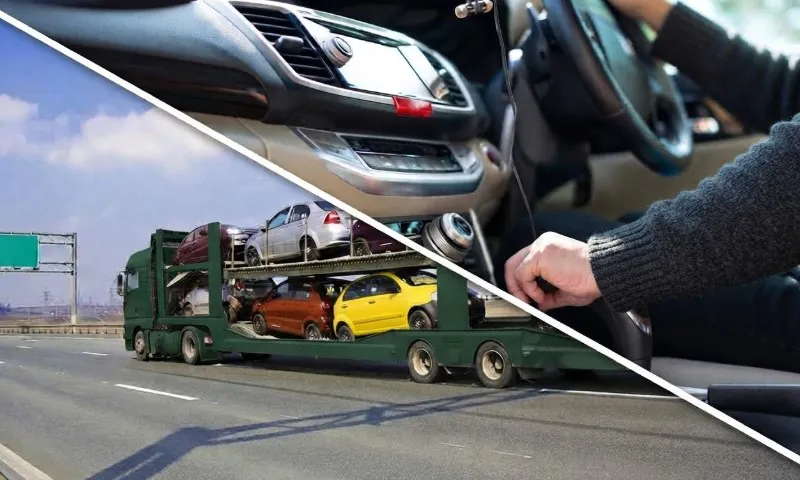
Driving can look cheaper until the full trip is calculated.
For a fair comparison, use:
Trip distance ÷ vehicle MPG × fuel price = fuel cost
Then add:
- hotel stays
- food
- tolls
- parking
- airfare or transportation needed at either end
- extra mileage placed on the vehicle
- time away from work or other responsibilities
A 2,000-mile drive can easily require three or four days once rest stops and overnight stays are included.
Shipping becomes easier to justify when the alternative means taking several days off work or adding thousands of miles to a valuable vehicle.
The Final Verdict
For most drivers, car shipping in 2026 is a four-figure expense once the journey reaches interstate or cross-country distance. Current data places many open-carrier shipments around $900 to $1,600, with shorter moves sometimes below that range and enclosed or specialty transportation considerably above it.
Distance matters, but it is only the starting point. Vehicle size, condition, carrier type, season, pickup location, urgency, and route demand all affect the final price.
The best way is to collect several quotes using exactly the same vehicle and route information, check the registration of the company arranging the shipment, and read the terms that explain when the price can change.
The cheapest number on the screen is not necessarily the cheapest shipment once the truck arrives.