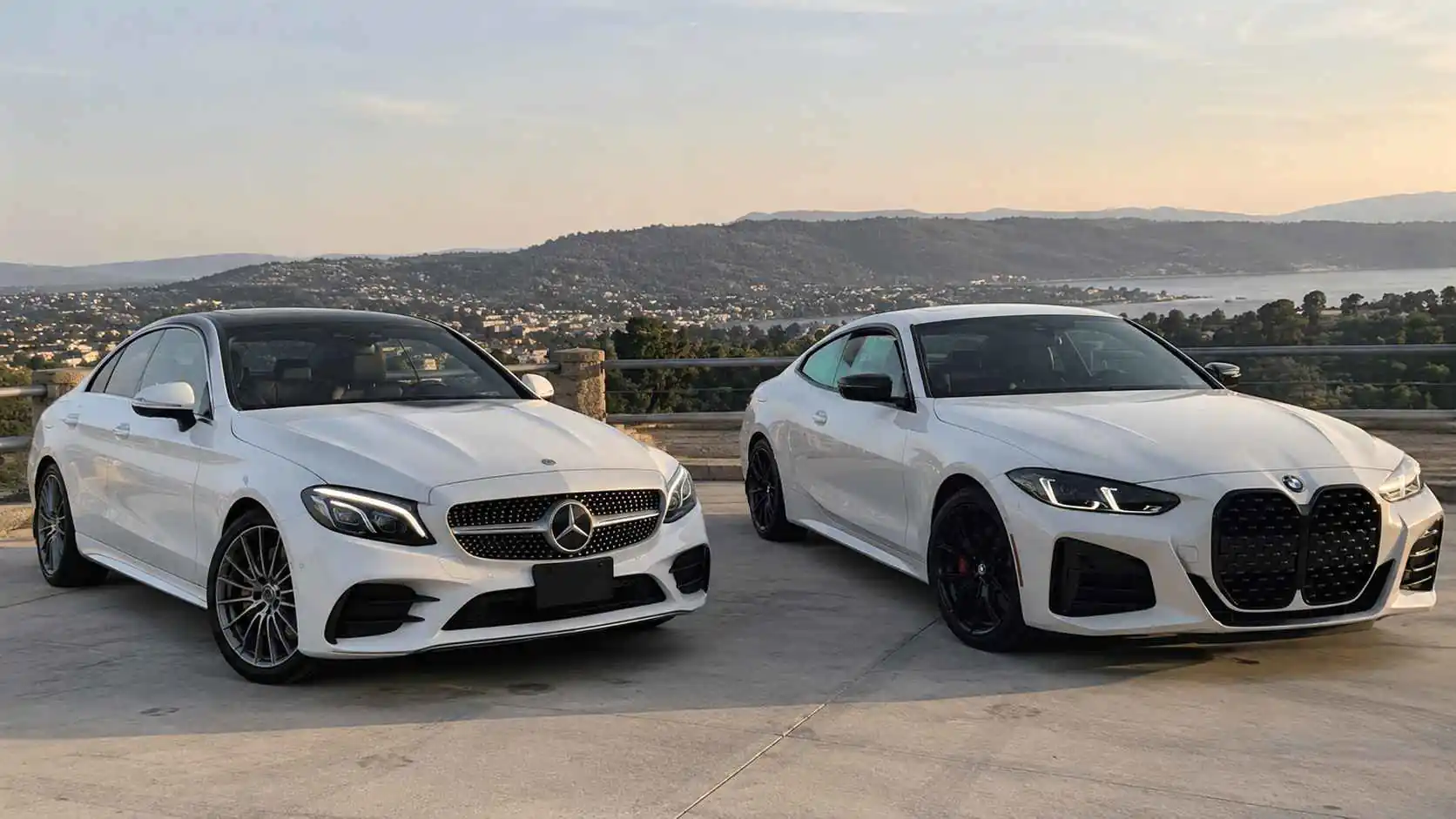

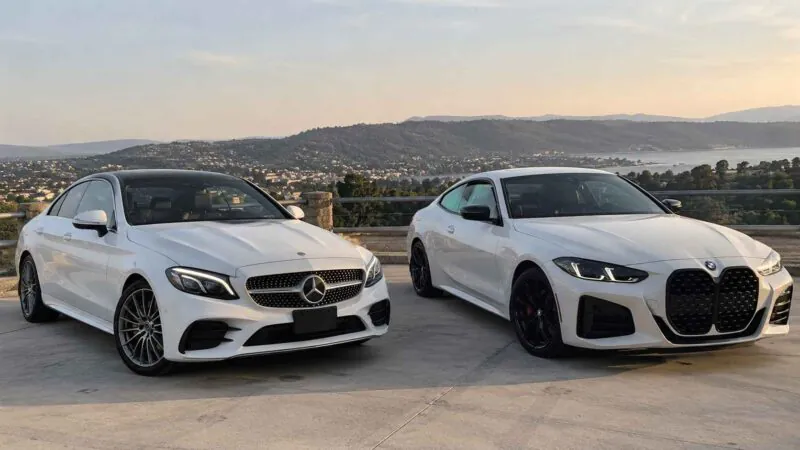
The Mercedes C300 Cabriolet and BMW 430i Convertible follow almost the same recipe. Both have four seats, turbocharged 2.0-liter engines, automatic transmissions, rear-wheel drive in their standard form and a fabric roof that disappears when the weather cooperates.
They are also close in performance. The Mercedes produces 255 horsepower and 273 lb-ft of torque, while the BMW has the same 255 horsepower but 295 lb-ft of torque. Mercedes quoted 0-60 mph in 6.1 seconds for the C300 Cabriolet, while BMW puts the 430i Convertible at 6.0 seconds.
So there is little reason to choose between them based on acceleration alone. The real difference is how each car feels once the road starts turning, how comfortable it remains with the roof down and what kind of drive you actually enjoy.
The Specs Are Almost Identical
| Specification | Mercedes C300 Cabriolet | BMW 430i Convertible |
| Engine | 2.0L turbocharged four-cylinder | 2.0L turbocharged four-cylinder |
| Power | 255 hp | 255 hp |
| Torque | 273 lb-ft | 295 lb-ft |
| Transmission | 9-speed automatic | 8-speed automatic |
| Standard drive | Rear-wheel drive | Rear-wheel drive |
| 0-60 mph | 6.1 seconds | 6.0 seconds |
| Seats | 4 | 4 |
| Roof | Power fabric soft top | Power fabric soft top |
Mercedes published the C300 Cabriolet with 255 hp, 273 lb-ft and a 6.1-second estimate to 60 mph in its C-Class Cabriolet specifications. BMW lists 255 hp, 295 lb-ft and 6.0 seconds for the rear-wheel-drive 430i Convertible.
There is only one tenth of a second between them on paper. You are not going to climb out of one and think the other suddenly feels like a much faster car.
The BMW 430i feels sharper when the road starts turning
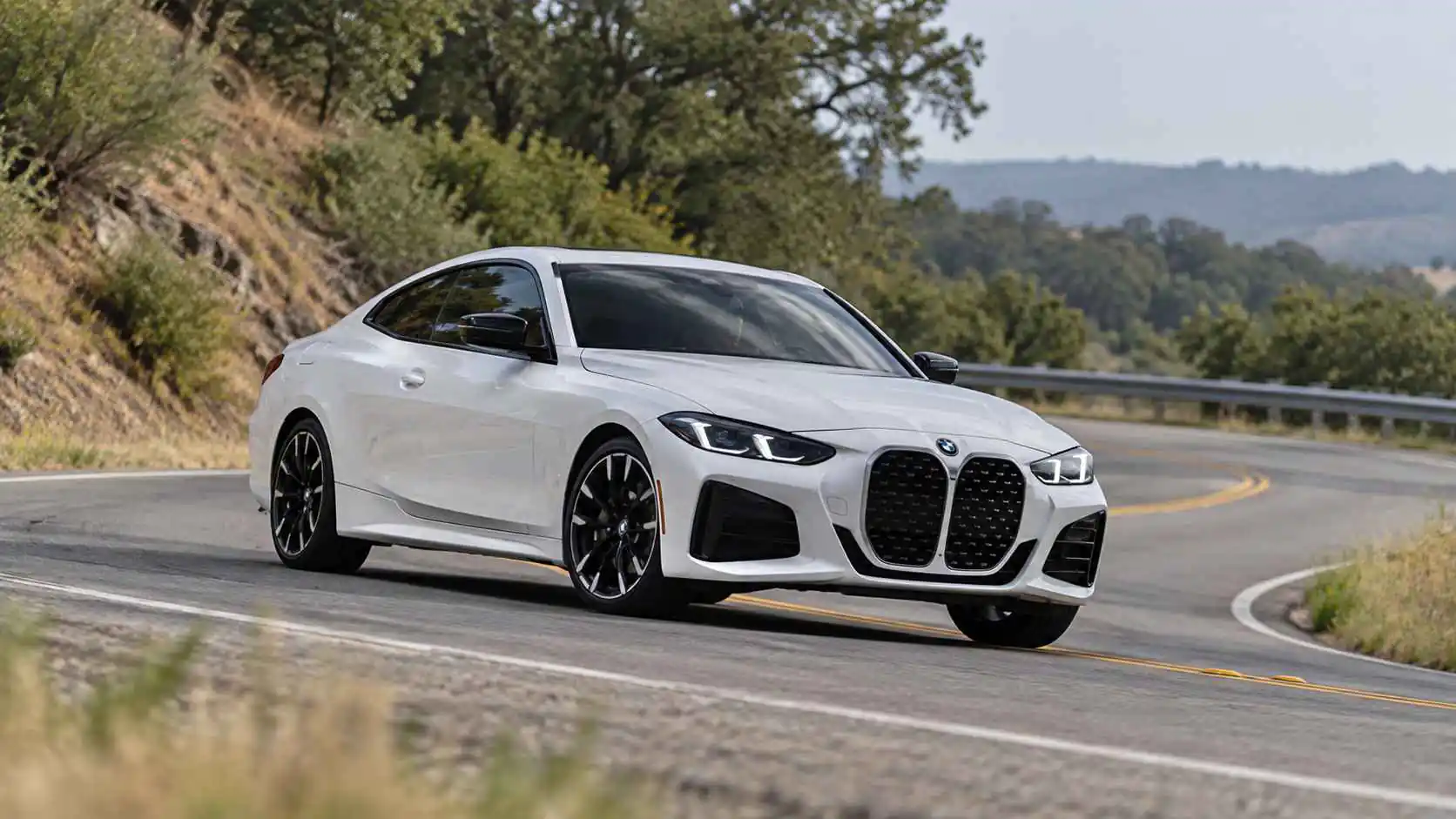
The 430i Convertible has the more athletic character of the two. Steering is quick, the front end responds cleanly when you turn in and the eight-speed automatic works well with the turbocharged four-cylinder engine.
Its extra 22 lb-ft of torque also helps the BMW feel strong without needing high engine speeds. Accelerating away from a slower car or pushing out of a corner rarely leaves the 430i waiting for power.
BMW also tuned the 4 Series differently from the related 3 Series. The car has a lower center of gravity, a wider rear track and suspension changes intended to give it a sportier feel.
Drivers buying one used may also want to know what to look for when checking a car’s suspension.
Do not expect the steering feedback of an older BMW sports coupe, though. Even favorable reviews of the current 4 Series point out that the steering becomes fairly vague when the car is pushed hard.
MotorTrend’s 430i Convertible test found plenty of grip and precise responses, but the modern 430i is still closer to a fast luxury convertible than a lightweight sports car.
The Mercedes C300 is happier taking things a little slower
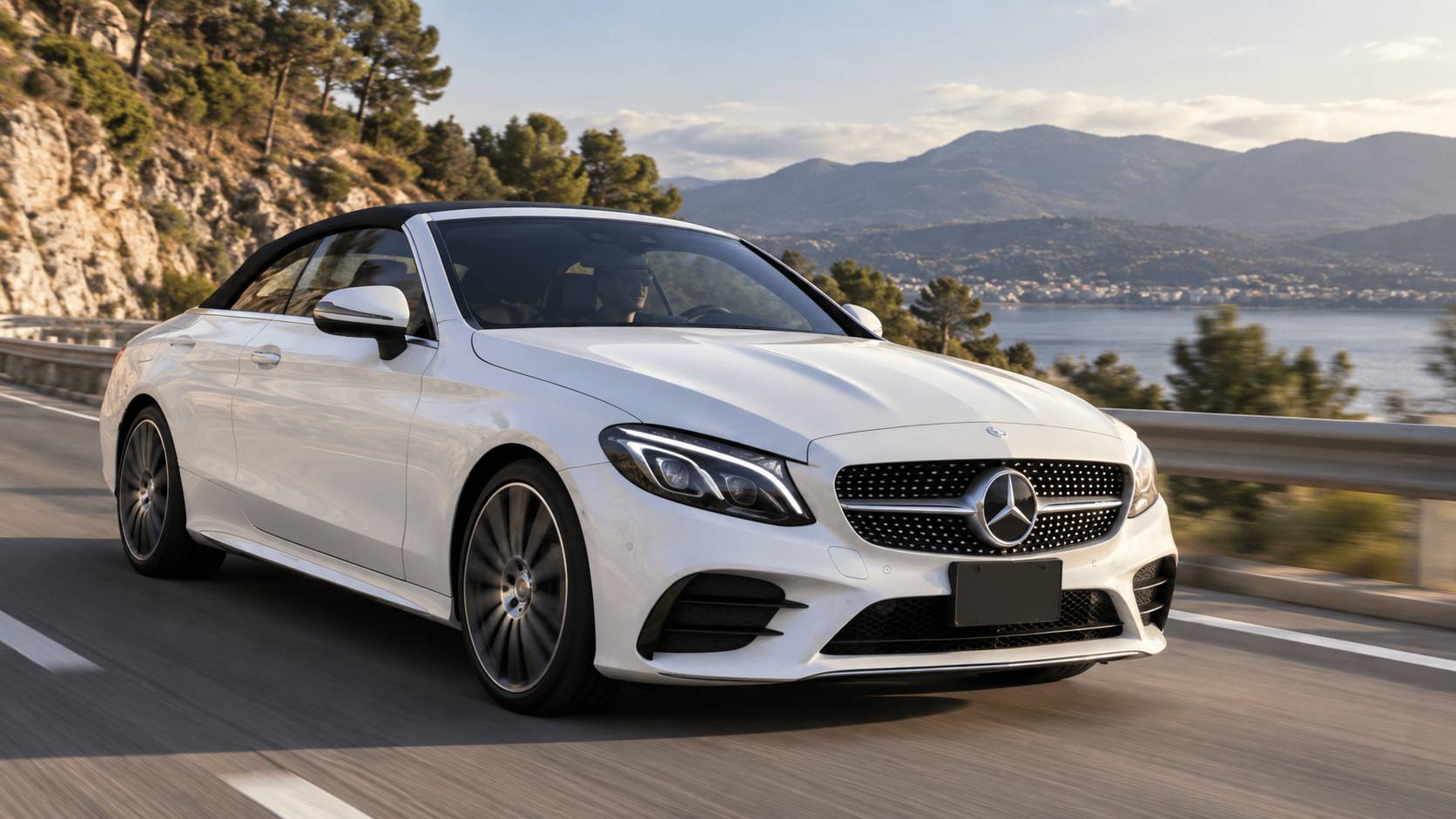
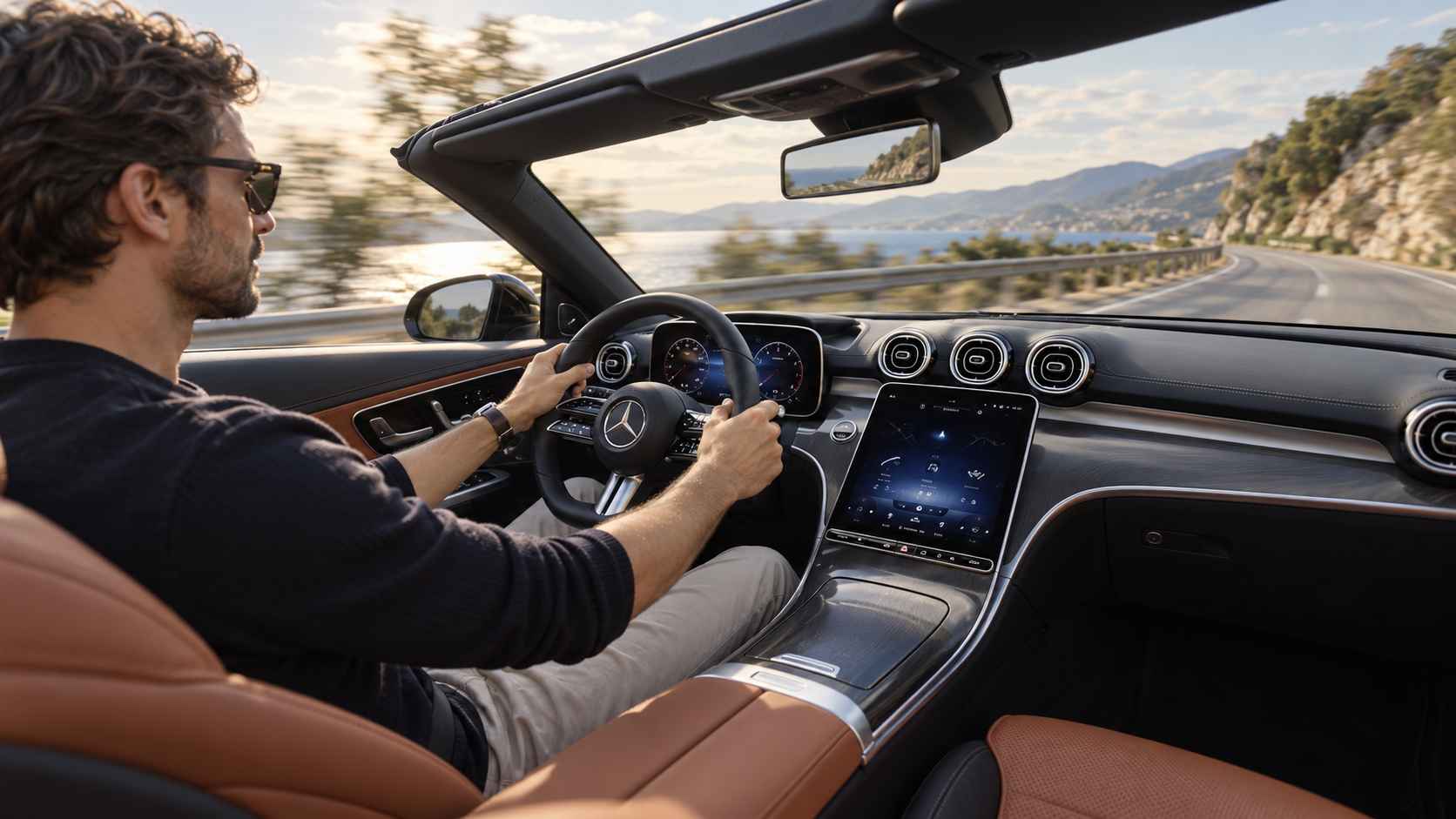
The C300 Cabriolet has a different character. It still has rear-wheel drive, 255 hp and enough performance to enjoy a winding road, but Mercedes puts more emphasis on making the roof-down experience comfortable.
The nine-speed automatic shifts smoothly and the engine delivers its torque from low revs. There is enough power for an empty road without needing to work the engine hard.
The chassis also feels secure rather than nervous. You can carry speed through a sequence of corners without the C300 feeling out of place, but it does not constantly encourage you to keep pushing harder.
That calmer behavior fits the car. The C300 Cabriolet works particularly well when the road is flowing rather than extremely tight, with enough performance to keep the drive interesting and enough refinement to enjoy the scenery at the same time.
Both become more entertaining when the roof comes down
A comparison based only on horsepower misses a large part of why anyone buys either car. Both are much more enjoyable with the roof folded away.
Mercedes fitted the C300 Cabriolet with a three-layer acoustic fabric roof that opens in less than 20 seconds. Mercedes also offered AIRCAP to reduce turbulence and AIRSCARF to send warm air around the neck and shoulders of the front occupants.
Those features make a noticeable difference when the temperature drops. A cool evening does not automatically mean the roof needs to stay closed.
The BMW takes a similar approach with its fabric roof, but the experience feels slightly more driver-centered. Sit low, lower the roof, switch into Sport mode and the 430i becomes far more entertaining than its 255-hp figure suggests.
Neither needs huge power for this type of driving. At normal road speeds, hearing more of the engine and feeling the air around the cabin add more to the experience than another 100 horsepower would during a routine trip through town.
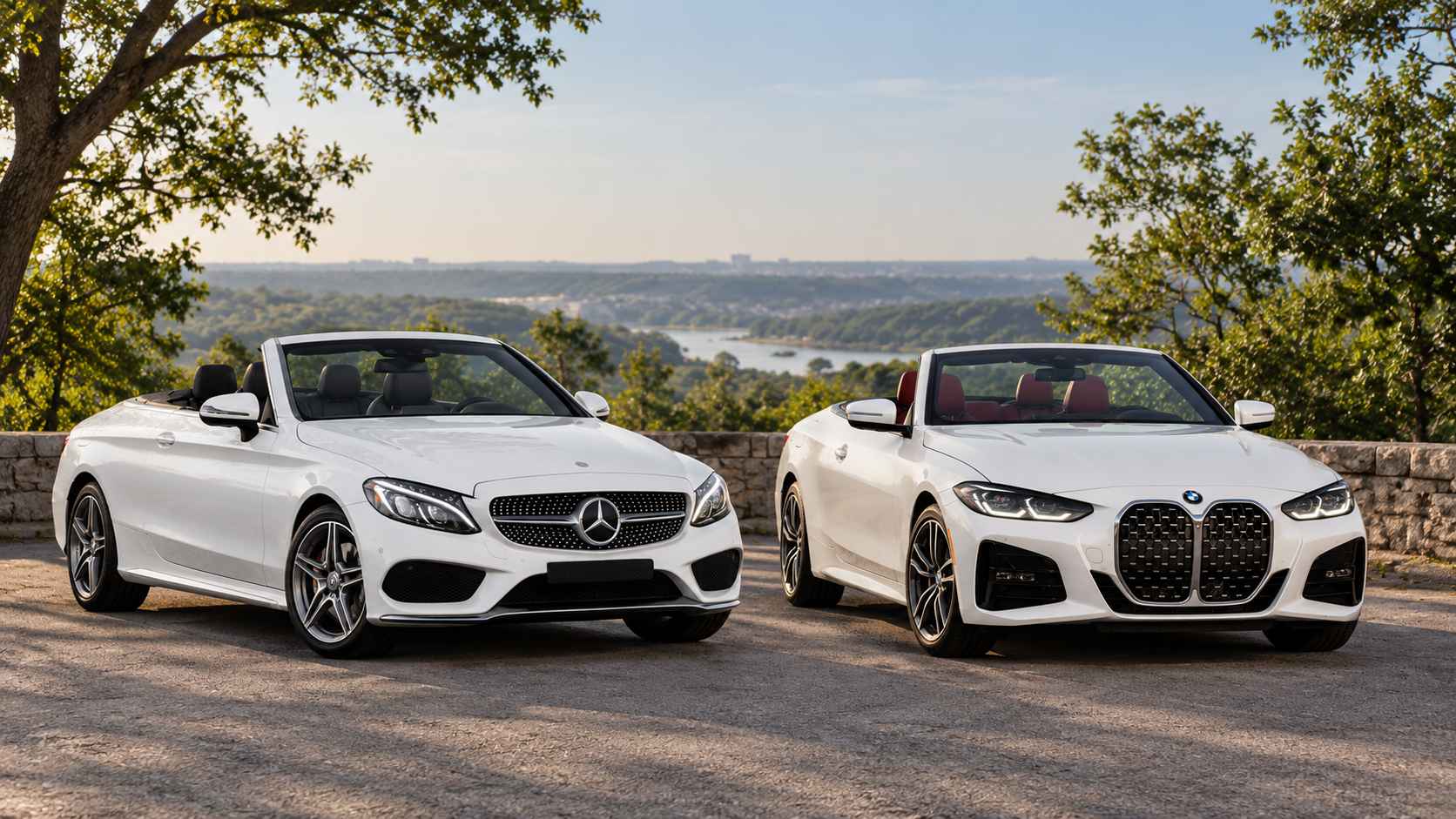
The Mercedes is the better convertible when comfort comes first
The C300 starts pulling ahead when the plan is a long roof-down drive rather than a short blast on a winding road.
AIRCAP reduces the air moving through the cabin and AIRSCARF helps on colder days. The soft top was also designed with several layers of insulation, so the Mercedes remains reasonably quiet when the roof is closed.
Those details are important if the convertible is going to be used throughout the year. You do not always want maximum wind and noise just because the roof is open.
The Mercedes also has the type of relaxed driving position that suits a long coastal road or a few hours on the highway. The C300 still feels quick when you need it, but comfort stays near the front of the experience.
The BMW gives you more when you actually want to drive hard
Move away from the highway and onto a road with repeated corners, and the BMW starts to make a stronger case for itself.
The 430i changes direction with more enthusiasm. The eight-speed transmission also reacts quickly when you ask for another gear, especially in Sport mode.
Rear-wheel drive is standard on both cars, so neither is simply dragging itself through a corner with the front wheels. The difference is in the tuning. BMW gives the 430i more of the responses expected from a car wearing a 4 Series badge.
Its limits are also worth keeping in perspective. The Convertible carries extra structural weight compared with the 430i Coupe, and the four-cylinder 430i is not pretending to be an M4. What it does provide is enough pace and grip to enjoy a road without turning every drive into a race.
Which one is a “smarter” buy?
Neither of these cars is a budget purchase, especially once insurance, maintenance and depreciation enter the picture.
Buying one simply because you enjoyed a short test drive can become an expensive way to discover that you actually preferred the other car.
A trip can provide a better excuse to spend several days with one. Dubai is a well-known place for that kind of experience because premium and performance cars are widely available to visitors. If you are staying in the city, services offering rent a car Dubai Al Barsha make it easier to choose something more interesting than a standard rental and enjoy it for the duration of the trip.
You might also discover that your preference changes. The BMW can impress immediately on a short drive, while the Mercedes becomes easier to appreciate after several hours behind the wheel.
Neither rear seat is particularly generous
Both cars technically seat four people, but neither should be treated as a four-seat family car.
The rear seats are useful for shorter journeys, children or extra luggage. Adults can fit, but getting into the back requires moving the front seat and legroom is limited.
Roof-down driving also exposes rear passengers to more wind than the people in front. Wind-management systems help, but the rear seats are still the least comfortable place to spend a long open-top journey.
If rear-seat use is going to be frequent, a convertible from this class already involves a compromise regardless of the badge on the hood.
The four-cylinder engines are better than their specifications suggest
Neither engine is exotic. Both are turbocharged four-cylinders producing exactly 255 hp, and neither has the sound of the six-cylinder engines available farther up the range.
For readers comparing other models, we also have a guide on how to identify a car’s engine.
For normal roads, though, the performance is enough. Both reach peak torque low in the rev range, which gives them useful acceleration without waiting for the engine to reach its upper limits.
The BMW has the advantage in torque with 295 lb-ft against 273 lb-ft in the Mercedes. You notice it more in mid-range acceleration than in the official 0-60 mph numbers.
The Mercedes responds smoothly and suits the relaxed nature of the car. The BMW feels slightly more eager, especially when the transmission is left in a sportier setting.
Which one sounds better?
Anyone expecting a dramatic exhaust note from either 2.0-liter engine will probably be disappointed. Both sound like modern turbocharged four-cylinders because that is exactly what they are.
The BMW has a slightly sportier character when accelerating and lets more of the mechanical experience into the drive. The Mercedes keeps things quieter and more polished.
With the roof down, engine sound becomes more noticeable in both cars. The BMW suits a driver who wants to hear more of what is happening, while the Mercedes does a better job of keeping the experience calm.
Which convertible is easier to drive every day?
The answer depends on what happens during the rest of the week.
The Mercedes is very easy to use as a normal luxury car. The controls, suspension and transmission suit traffic, long highway journeys and relaxed city driving. Put the roof up and it behaves much like a well-insulated coupe.
The BMW is also comfortable enough for daily use, so choosing it does not mean accepting a harsh sports-car ride. It simply keeps a little more of its sporting character during normal driving.
Both have compact rear seats and the usual convertible compromises around luggage space. Anyone buying either as a daily car should check that their normal bags and passengers actually fit rather than relying only on published dimensions.
So, which one is more fun?
The BMW 430i Convertible is more fun when the road itself is the reason for going out.
It feels sharper through corners, has more torque and its eight-speed automatic works particularly well when the pace increases. Lower the roof on a winding road and the 430i gives the driver a little more to work with.
The Mercedes C300 Cabriolet takes the advantage when the ideal drive involves a long road, comfortable seats and several hours with the roof down. AIRCAP, AIRSCARF and the quieter character of the car make it easier to enjoy open-top driving outside perfect summer weather.
So the decision is less about which badge builds the better convertible and more about what you want to do once the roof disappears. Choose the BMW for the road. Choose the Mercedes for the journey.