
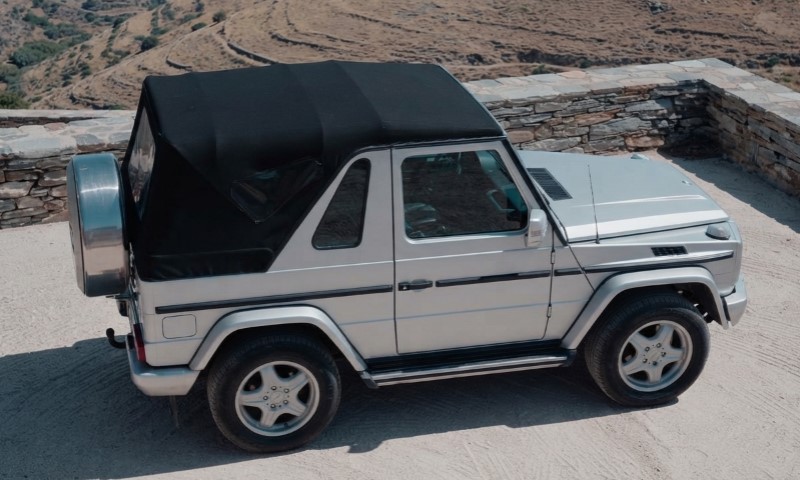
Mercedes is bringing open-air driving back to the G-Class, but the new Cabriolet takes a different approach compared with earlier versions.
Instead of returning to a short-wheelbase, two-door setup, engineers have adapted a folding fabric roof to the full four-door G-Class body.
Early footage gives a fairly clear look at how the system operates, where the folded material is stored, and which structural sections stay fixed.
Several mechanical details, however, have not yet been officially confirmed.
Mercedes G-Class Cabriolet Soft-Top Roof Design
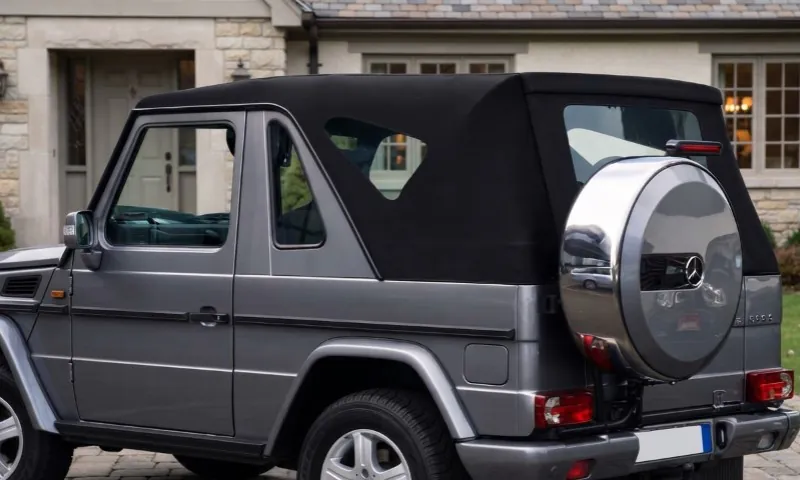
Fabric replaces a conventional metal roof across a large portion of the new G-Class Cabriolet.
Choosing a soft top allows a much larger roof section to retract without requiring a bulky metal-panel storage system.
Earlier G-Class Cabriolets were based on a short-wheelbase, two-door body. Newer prototypes keep four full doors, creating a much larger passenger compartment that needs to be exposed when the roof opens.
Buyers interested in older Mercedes convertibles can also compare inventory at Florida used car dealerships, where pre-owned Mercedes models may appear alongside other open-top vehicles.
Several visible design elements separate the new setup from a conventional full convertible:
- A short fixed roof section appears above the front portion of the cabin.
- A substantial roll bar sits behind the second seating row.
- Open roof space extends across both seating rows, giving front and rear occupants direct exposure to the sky.
Such a layout makes the vehicle closer to a large targa-style setup than a completely open convertible with no fixed upper structure.
How the Mercedes G-Class Cabriolet Roof Opens
@wearecurated How to work the convertible roof on the Mercedes-Benz G500 Cabriolet #WeAreCurated #mercedes #mercedesbenz #g500 #cabriolet #convertible #suv #luxurysuv ♬ original sound – We Are CURATED
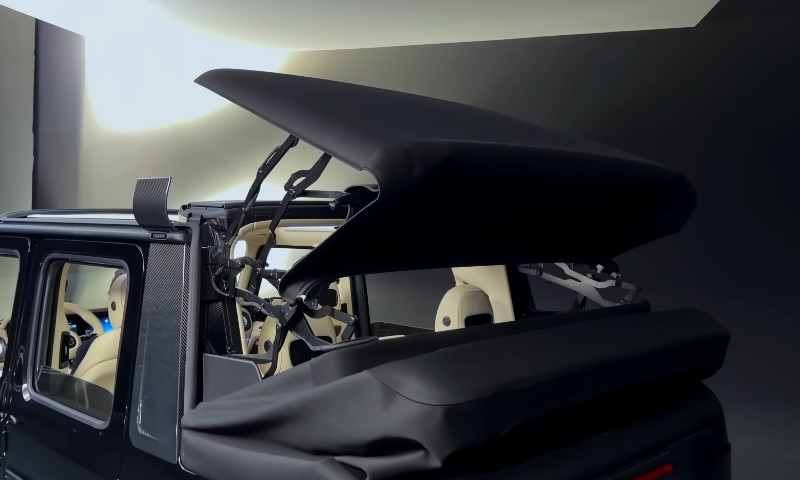
Electric operation handles roof movement. No manual folding process is visible in released footage.
Fabric material bends at several points as the mechanism activates.
Roof sections first move upward, then travel rearward while separating visually around an outer frame built into the upper body structure.
Movement follows a clear sequence:
- Multiple folding points compress the large fabric panel as it travels rearward.
- Front and rear seating positions become exposed once the roof clears the cabin.
- Folded material continues toward the rear instead of retracting into a hidden compartment above the passengers.
No driver is visibly operating manual roof hardware during the teaser sequence.
Such footage suggests Mercedes may have designed a largely automated process, though final operating procedures have not yet been confirmed.
Where the Folding Roof Is Stored
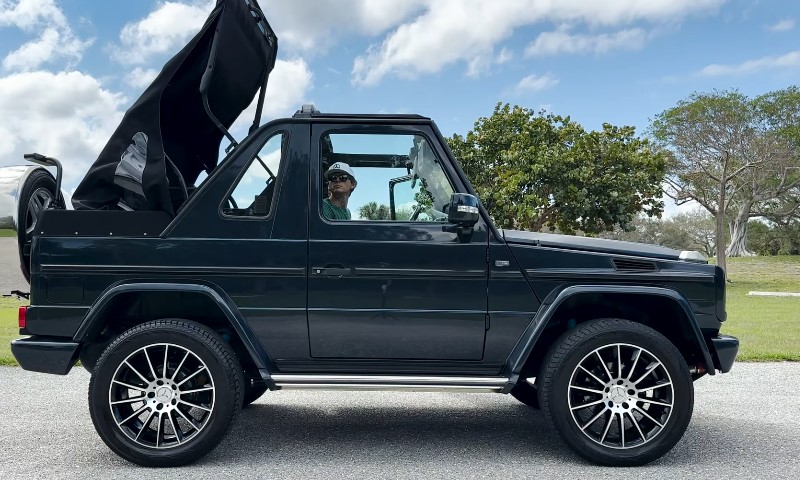
Instead of disappearing completely inside the body, folded fabric stacks on itself near the rear cargo area.
Roof material sits at roughly the same height as the upper section of the rear-mounted spare tire once fully open. Keeping the folded top visible avoids the packaging problem created by trying to conceal such a large roof beneath body panels.
Such a layout is especially practical on a vehicle as tall and boxy as the G-Class.
Cargo-area space will likely play an important role in housing parts of the mechanism.
Exact effects on luggage capacity have not yet been detailed, and it is still unclear how much internal space the roof hardware will occupy.
Visible roof storage also gives the Cabriolet a distinctive rear profile when operated in open-top form. Folded fabric creates a noticeable stack behind the passenger compartment rather than disappearing out of sight.
Large amounts of folded material are unavoidable because the system covers much more cabin area than a traditional compact convertible roof.
Using an exposed stack allows Mercedes to manage that extra material without making the rear body significantly larger.
Structural Support
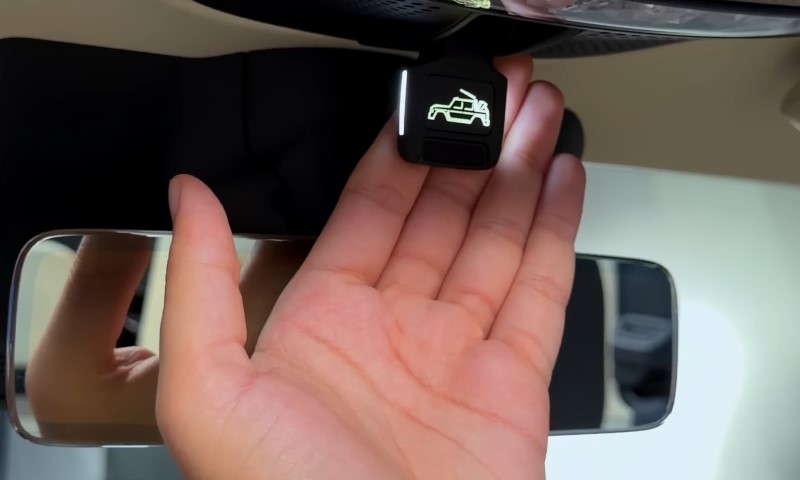
Removing such a large section of roof requires fixed components to stay in place around the passenger compartment.
An outer frame continues around the roof opening after the fabric retracts.
Structural framing helps define the opening while giving the moving roof a fixed path during operation.
Several fixed elements are visible even when the top is fully open:
- A large roll bar sits behind the second seating row.
- An outer perimeter frame continues around the roof opening.
- LED ambient lighting runs along the interior edge of that opening.
Lighting turns part of the fixed frame into a visible cabin feature instead of trying to conceal its presence.
Fixed structural pieces also explain why the new Cabriolet does not look like a conventional convertible once its roof is open.
Mercedes appears to prioritize a very large opening while keeping substantial upper-body components intact.
Compared With the Older G-Class Cabriolet
Previous G-Class Cabriolet models used a much smaller two-door configuration. Adapting a folding roof to a four-door body creates a significantly different packaging challenge.
Older systems also required more manual involvement. Two roof latches had to be released by hand before powered operation could begin.
Key differences visible so far include:
- Earlier Cabriolets used a two-door body, while the new model keeps four doors.
- Older roof systems required manual release of two latches before powered movement.
- New footage shows roof operation with nobody visibly seated in the driver’s position.
Such behavior suggests manual latch release may no longer be necessary.
Earlier G-Class Cabriolet soft tops also relied on fabric construction, meaning Mercedes is continuing the basic soft-roof concept while applying it to a much larger four-door vehicle.
What Is Still Unknown
Several important specifications have not yet been disclosed.
Questions still awaiting official confirmation include:
- Exact opening and closing times.
- Final latch design.
- Complete mechanical layout beneath the fabric.
- Permitted vehicle speed, if any, during roof operation.
Released footage shows the G-Class stationary during roof movement, so it does not provide evidence of an operating speed limit.
Final details should become clearer once Mercedes presents the production vehicle in full.
A complete reveal was expected before the end of 2026, with detailed specifications for the roof system still pending at the time of early reports.
Summary
Mercedes has taken a practical approach to creating an open-air G-Class without abandoning the full four-door body.
A large electrically operated fabric roof folds rearward and stacks near the cargo area, while fixed structural elements stay in place around the cabin.
Such a setup gives both seating rows significant open-roof exposure while avoiding the packaging demands of a fully retractable metal system.
Final details on operating speed, latch design, opening time, and the complete mechanism are still pending, but early footage already shows how differently the new Cabriolet handles one of the hardest parts of building a four-door convertible.