
New York City is putting 15 mph limits outside hundreds of schools in 2026, cutting speeds that had often been set at 20 mph.
Mayor Zohran Mamdani announced the expansion in March, and city officials said on September 9 that more than 200 school locations already had new 15 mph zones.
Roughly 800 locations are expected to have them by the end of 2026.
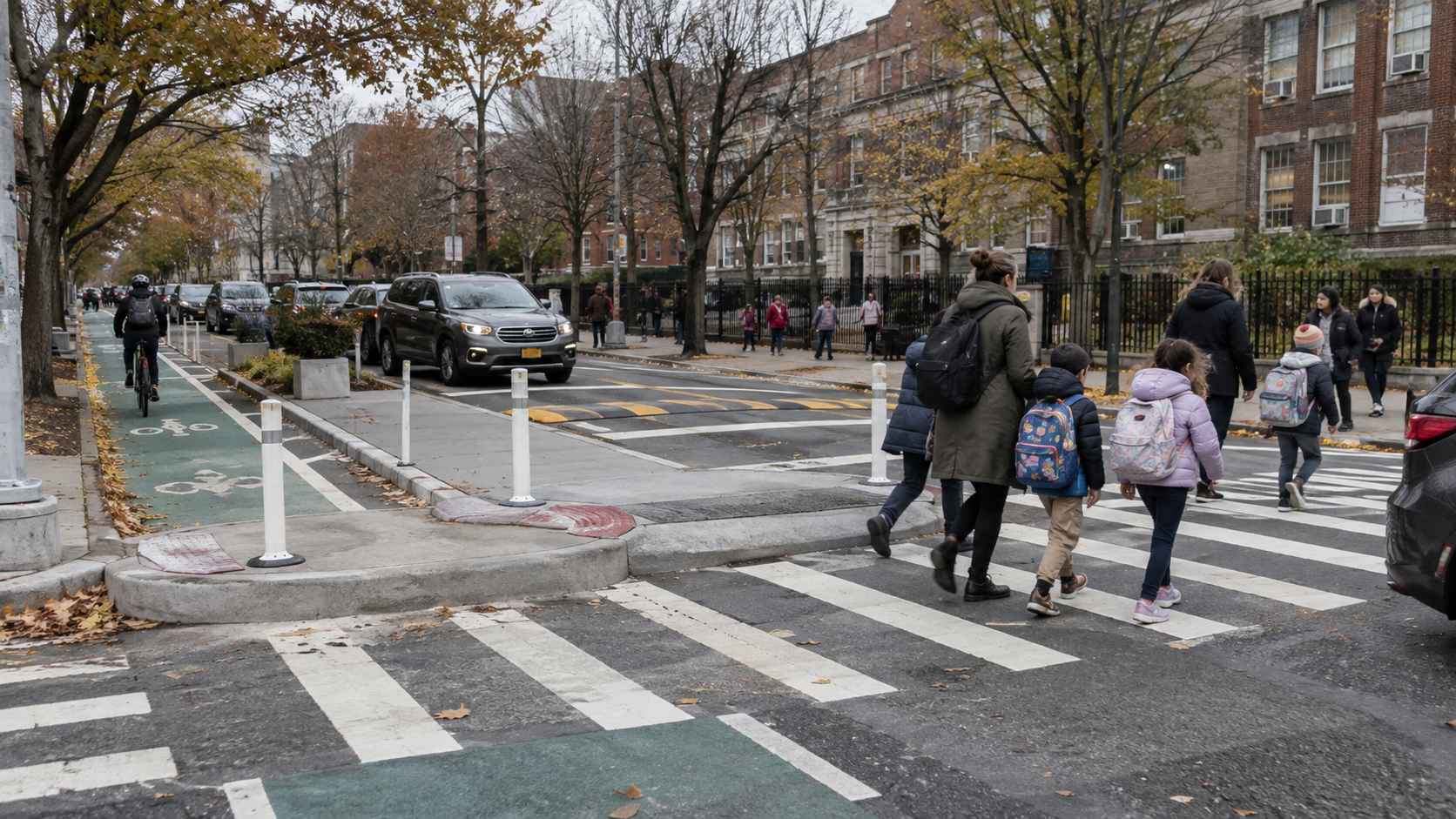
School-zone signs are only one part of the program. NYC DOT is pairing lower posted speeds with intersection work, pedestrian improvements, school street redesigns, bike infrastructure, and temporary vehicle restrictions outside participating schools.
City officials present those measures as a coordinated safety effort aimed at reducing traffic danger during school travel times.
What Is Changing Around NYC Schools?
Hundreds of school locations are moving to a 15 mph speed limit. More than 800 additional school locations were included in the 2026 plan announced in March, which would bring the citywide total with 15 mph limits to about 1,300 by year-end.
Many schools selected for 2026 already had 20 mph limits. About 500 campuses had 15 mph limits when the plan was announced, while many other sites among roughly 2,300 school locations operated under 25 mph limits.
City Hall also set a longer-term target. Officials said every eligible public, private, parochial, and charter K-12 school location should receive a 15 mph limit by the end of Mamdani’s first term.
Roughly 2,300 school locations across the five boroughs house about 3,200 schools, since some schools share campuses.
NYC Mayor Zohran Mamdani announced on Monday that the city would lower the speed limit to 15 miles per hour outside more than 800 schools this year and that his administration would do the same at all eligible schools by the end of his first term. https://t.co/yxZSOyuUjn
— Eyewitness News (@ABC7NY) March 16, 2026
Why Schools Are Getting Priority
City officials say lower speeds can reduce the severity of crashes involving pedestrians.
Their safety case includes an estimate that a pedestrian hit by a vehicle traveling 25 mph is more than three times as likely to suffer a serious injury as a pedestrian hit at 15 mph.
Crash patterns around schools are another part of the rationale.
A 2022 analysis cited in education reporting found higher crash and injury rates on streets near schools during drop-off and pickup periods.
Reported disparities were especially pronounced outside schools with larger shares of students of color.
Traffic crashes can also create legal and financial consequences for injured pedestrians, cyclists, and motorists.
Resources offered by the Shulman & Hill Brooklyn office cover personal injury matters tied to pedestrian accidents, bicycle crashes, and motor vehicle collisions in the borough.
Selection is not based only on school enrollment or geography. Officials say traffic safety data and planned street projects help determine which locations move first.
Higher-risk sites can also receive physical changes such as speed humps, hardened daylighting, and redesigned intersections.
Sammy’s Law Gave NYC More Control Over Speed Limits
Sammy’s Law expanded New York City’s authority to lower speed limits on qualifying streets.
State lawmakers passed the measure in 2024, and Gov. Kathy Hochul signed it that year.
Sammy Cohen Eckstein, a 12-year-old Brooklyn boy, is the law’s namesake. He was killed in 2013 after a vehicle struck him on Prospect Park West.
Previous state rules limited how far city officials could lower speed limits in many cases.
New authority under Sammy’s Law lets NYC DOT lower limits on qualifying streets without seeking City Council approval for each individual change. Citywide speed-limit changes still require local legislation.
Local community boards also get a formal role before a school slow zone takes effect. NYC DOT provides a 60-day notice and comment period for each proposed school-zone change.
How Fast Has the 15 MPH Rollout Moved?
March 16 marked the major policy announcement.
Mamdani said more than 800 additional school locations would receive 15 mph limits during 2026, with the broader goal of covering every eligible school location by the end of his first term.
September 9 brought a progress update.
NYC DOT reported that more than 200 school locations had already received 15 mph School Slow Zones and said roughly 800 were expected to be in place by the end of 2026.
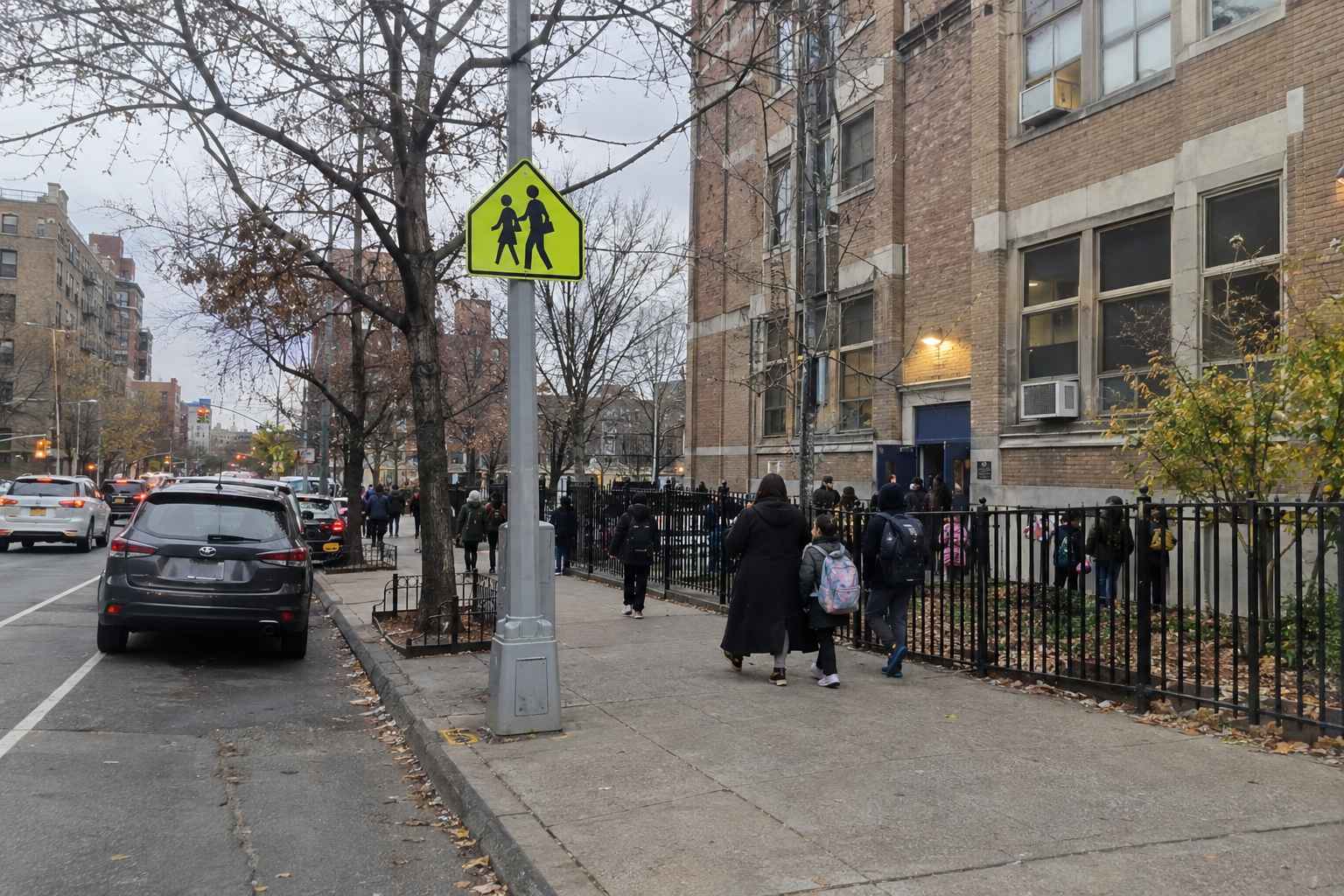
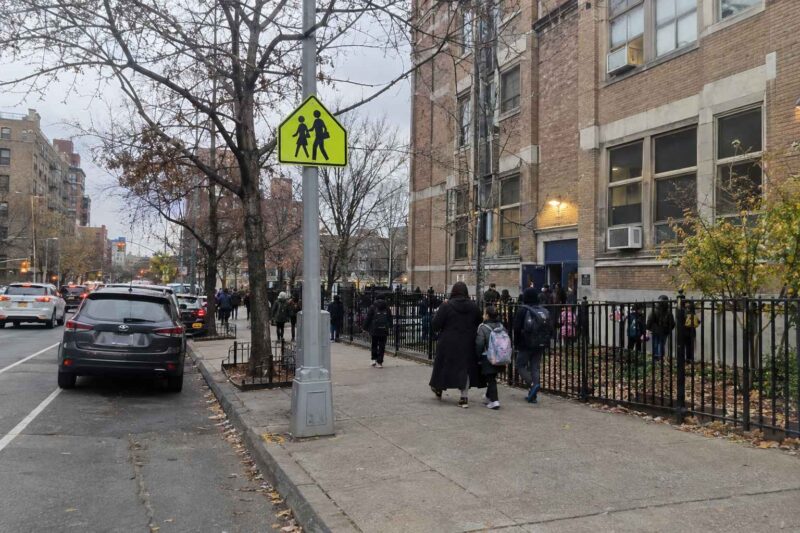
A photo taken in Queens that day showed a 15 mph sign outside a New York City public school as the new limits were being installed.
Reuters Connect lists the image as Sipa USA material and notes that Reuters did not independently verify or endorse the supplied material.
NYC’s School Safety Plan Includes More Than Speed-Limit Signs
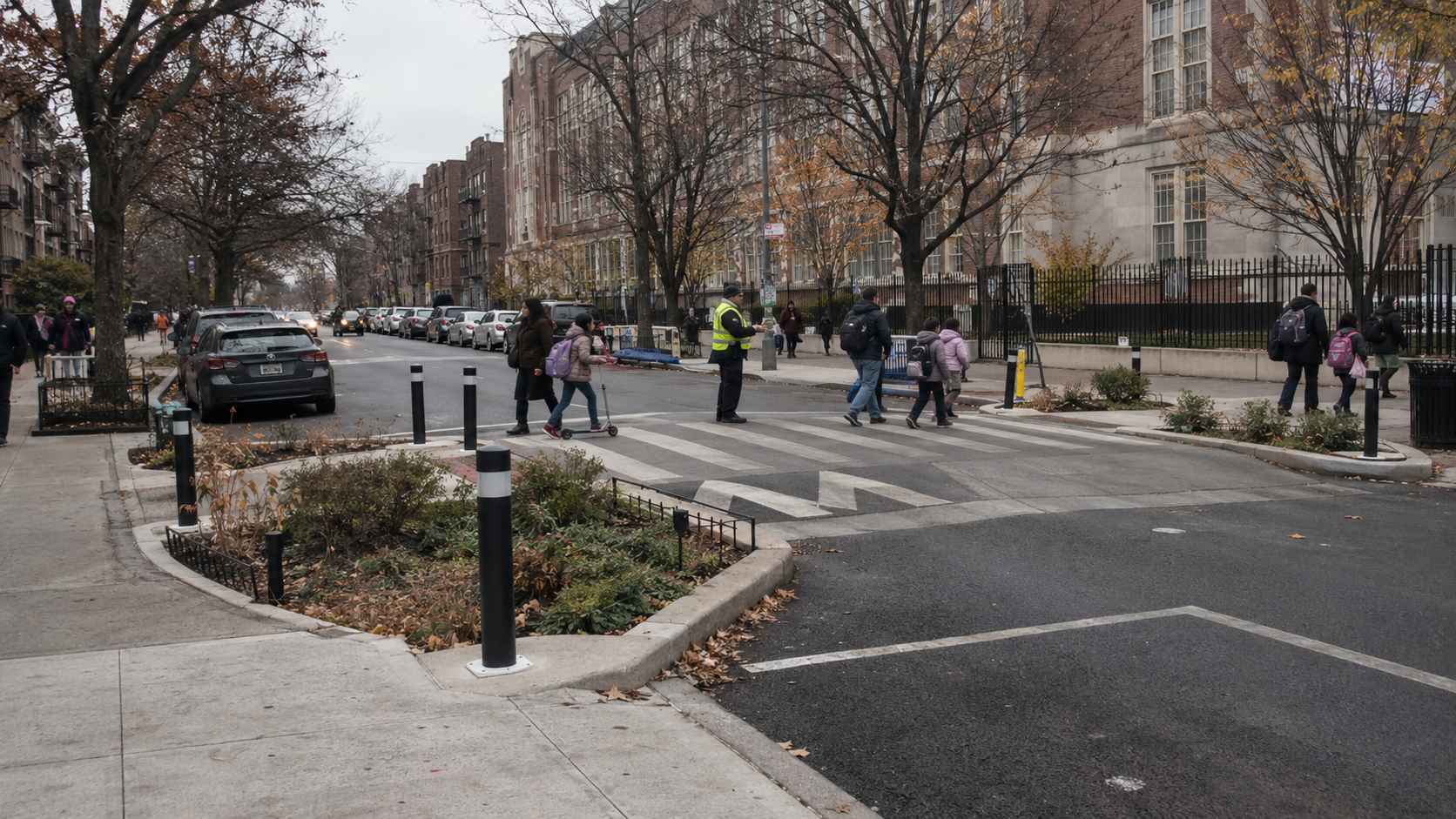
Posted limits are only part of NYC DOT’s work near schools in 2026. Street-safety upgrades are planned or underway next to more than 300 schools across the five boroughs.
Projects can change how drivers, cyclists, students, and families move through school blocks.
- Expanded pedestrian space near entrances and intersections
- Safer crossings and visibility improvements
- Bike lanes and other cycling infrastructure
- Traffic-calming features intended to slow vehicle movement
- Pickup and drop-off changes designed to reduce conflicts near school entrances
Several large projects also cover multiple schools at once.
Bronx work on Courtlandt Avenue, Park Avenue, and Morris Avenue is expected to benefit more than 10 schools and includes 3.7 miles of bike lanes, a protected bike-lane loop, and a large sidewalk extension near P.S. 1 on East 153rd Street.
Open Streets for Schools Adds Vehicle-Free Time
Open Streets for Schools gives participating campuses the ability to temporarily close selected streets to vehicle traffic during school activities.
Scheduled uses can include drop-off, pickup, recess, and outdoor learning.
Seventy-seven school Open Streets are launching for the 2026-27 school year.
Closures do not necessarily last all day. Each school can operate within a set schedule tied to its needs and approved street plan.
Clarkson Street in Tribeca is receiving one of the most visible changes.
NYC DOT plans to install its first gated Open Street outside a school on the block between Hudson Street and Varick Street. Paris’ Rues aux Écoles program inspired the gate concept.
Planned work on Clarkson Street includes more pedestrian space, public seating, safer crossings, better visibility, and design measures intended to slow motorists.
City-As-School High School, M.S. 721, and Open Plans are involved in the project.
What Results Will Matter Most?
Earlier speed reductions give NYC a point of comparison, but they do not yet show how the new 15 mph school zones will perform.
NYC DOT has reported that areas where limits were cut to 20 mph recorded a 14% reduction in vehicle crashes and a 31% reduction in car-related injuries.
Those figures concern earlier 20 mph zones, not the 2026 school-zone expansion.
- Crash totals and pedestrian injuries around affected schools
- Actual vehicle speeds after new signs and street designs are installed
- Driver compliance with 15 mph limits
- Differences between locations receiving signs alone and locations receiving physical redesigns
- Pace of installation compared with the roughly 800-school target for 2026
Posted limits and street design can produce different effects, so separating those factors will matter when later data becomes available.
Schools receiving speed humps, sidewalk extensions, daylighting, gates, or redesigned intersections may not be directly comparable with locations that receive mainly new signage.
What Comes Next for NYC’s 15 MPH School Zones?
New York City’s school-zone program has moved quickly since its March announcement.
More than 200 locations had received 15 mph limits by September 9, and officials still expected roughly 800 locations to be covered before 2026 ends.
Future assessment will depend on more than installation totals.
Vehicle speeds, crash rates, injury data, driver compliance, and conditions during arrival and dismissal periods will provide a clearer picture of what changed after implementation.
City officials have set an additional benchmark for the years ahead: extend 15 mph limits to every eligible school location during Mamdani’s first term.
Progress toward that goal will make 2026 the first large test of how lower school-zone limits work alongside physical street changes and vehicle-free school blocks across New York City.