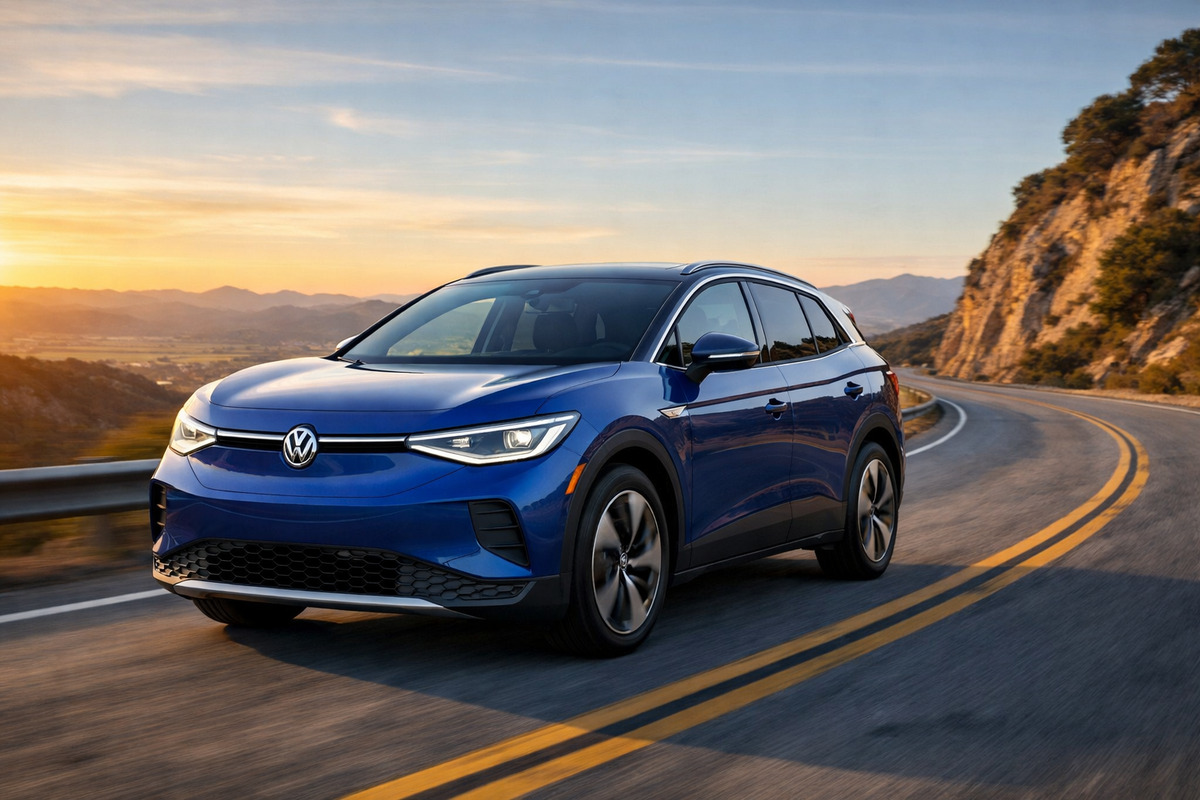

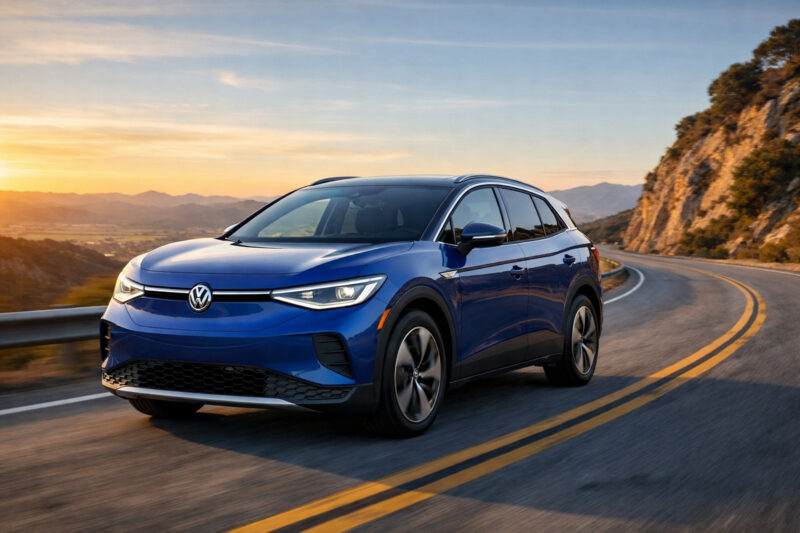
A 5-year-old Volkswagen ID.4 has reached a point where real ownership stories start to matter more than marketing promises. Early 2021 builds have lived through winters, road salt, fast charging sessions, software updates, delayed parts, and plenty of daily commuting.
Some of what shows up now looks familiar to anyone who has owned an EV for a while. Some of it sits squarely in ID.4 territory.
Buyers scanning listings for 2021 and 2022 ID.4 models are stepping into a very specific phase of the car’s life cycle.
Battery coverage remains active for most, yet electronics, door hardware, charging behavior, and recall history start to shape the real ownership experience.
Today, we prepared a practical guide to what tends to appear after about 5 years, what symptoms look like in daily driving, and what deserves attention before money changes hands.
What 5 Years Old Really Means For An ID.4
Most used ID.4 examples that feel “mature” fall into:
- 2021 ID.4 First Edition
- 2021 ID.4 Pro
- 2021 ID.4 Pro S
- 2022 ID.4 Pro
- 2022 ID.4 Pro S
- Some 2022 AWD variants
Mileage often lands between 40,000 and 90,000 miles. Leasing patterns and commuting habits explain the widespread.
Battery coverage remains helpful for many shoppers because Volkswagen backs the high-voltage battery for 8 years or 100,000 miles and promises at least 70% net capacity during that window, according to the official resources.
Battery health rarely drives complaints at this age. Software behavior, recalls, door hardware, and charging systems shape the lived experience far more.
Electronics And Recalls Shape Daily Life
ID.4 complaints rarely read like traditional engine or transmission failures. Ownership friction often comes from:
- Infotainment behavior
- Instrument display resets
- Charging system faults
- Door hardware failures
- Safety recalls and repair delays
Consumer Reports owner data has repeatedly highlighted categories such as in-car electronics, EV charging, body hardware, climate systems, and electrical accessories as frequent trouble areas for ID.4 reliability.
Common Problems After 5 Years
Infotainment And Instrument Screens Freezing Or Rebooting
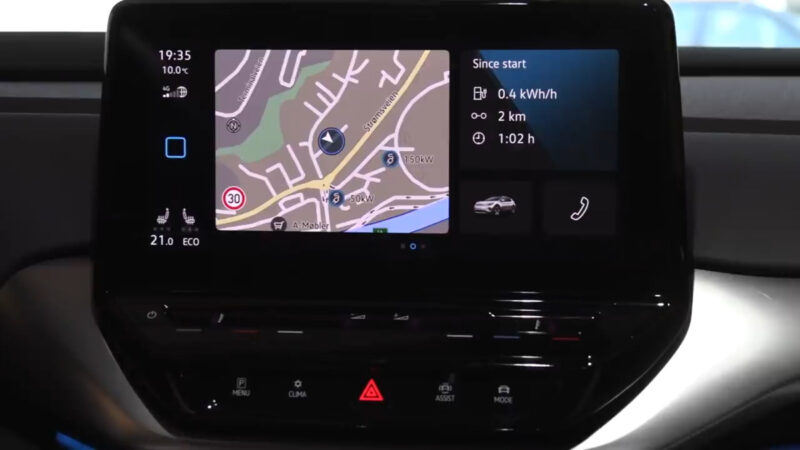
Owners often say the vehicle drives well while the screens misbehave. Complaints describe random resets, delayed backup camera images, black center displays at startup, missing speed readouts, and lag that makes simple tasks feel clumsy.
Typical symptoms include:
- Center screen stays black at startup
- Instrument cluster reboots while driving
- Backup camera image loads late or fails
- Speed display temporarily disappears
Volkswagen and safety regulators have treated part of this as a safety issue. Recall code 919A covers vehicles where software may cause displays to reset or fail to boot.
Why the issue shows up later:
- Early software builds struggled
- Skipped updates can leave a vehicle unstable
- Some vehicles still show intermittent faults even after updates
What to check before buying:
- Paperwork confirming recall 919A completion
- Multiple reverse shifts to confirm backup camera response
- Watch the cluster for flickers or reboots
Door Handle And Unlocking Problems
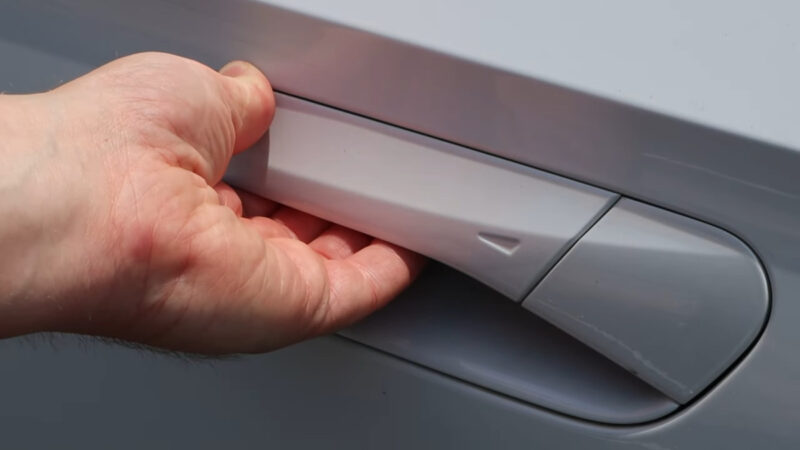
Door handle faults have carried real safety implications. Moisture intrusion can cause erratic unlocking or poor handle response.
Reuters reported Volkswagen recalling about 98,806 ID.4 vehicles from model years 2021 through 2024 due to water ingress risk in the door handles. The Verge reported production at the Chattanooga plant paused while Volkswagen addressed the problem.
Typical symptoms:
- Keyless entry fails after rain or washing
- Door handle behavior feels inconsistent
- Door status warnings appear
What to check:
- Confirmation that the recall repair has been completed
- Repeated lock and unlock tests on all doors
- Open and close each door multiple times
12V System Failures and Non-Start Events
Every EV still depends on a 12V battery for computers, relays, and core systems. When the 12V side struggles, the vehicle can feel completely dead.
The ID.4 has experienced problems involving the integrated DC/DC converter that charges the 12V battery.
NHTSA documents describe condensation damaging circuitry, leading to improper 12V charging. Transport Canada published similar language. The condition can cause:
- Non-start situations
- Warning messages
- Tow ins
- Loss of motive power if driven until the 12V battery depletes
Typical symptoms:
- “12V battery low” warnings
- Random electrical faults
- Vehicle refusing to go into drive
What to check:
- Ask if the OCDC recall was completed
- Confirm clean startup after sitting overnight
- Scan for stored fault codes if possible
High Voltage Battery Management Resets
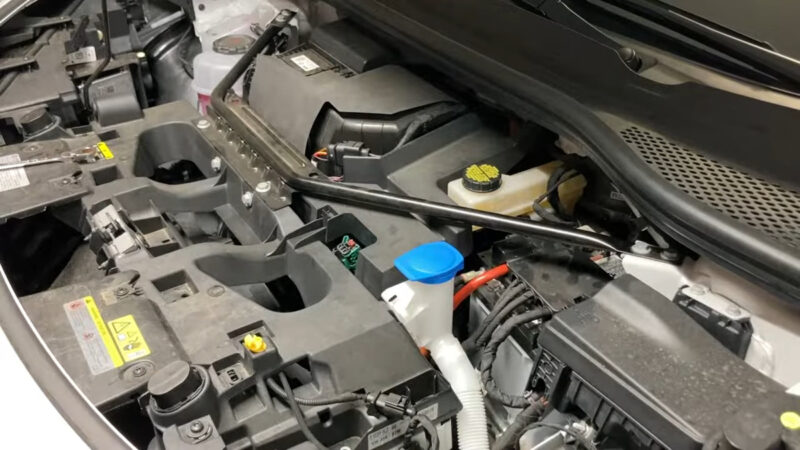
Early ID.4 model years have experienced high voltage system software resets. NHTSA recall 23V-040 documents cases where the high voltage battery management module may reset, leading to loss of propulsion. In rare cases, the pulse inverter can deactivate while driving.
Typical symptoms:
- Sudden loss of power
- Multiple warning messages
- Vehicle requiring a restart cycle
- Dealer software updates required
What to check:
- VIN recall history
- Documentation showing software updates
- Moderate acceleration during test drive while watching for warnings
Fire Risk Recalls
Two categories deserve attention.
12V Charging Cable Chafing Risk
Volkswagen recalled some vehicles because a 12V charging cable could rub and potentially short if the insulation wears through.
Autoblog summarized the concern around insulation wear and potential fire risk.
High Voltage Battery Module Fire Risk
In December 2025, NHTSA documents described a recall affecting 311 ID.4 vehicles from model years 2023 and 2024 due to misaligned electrodes in high-voltage battery cell modules.
Interim guidance includes limiting charge to 80%, avoiding DC fast charging, and parking outdoors after charging until modules are replaced.
What to check:
- Verification that all recalls have been completed
- No remaining “park outside” advisories
- Walk away from any seller dismissing active high voltage warnings
Gear Indicator And Rollaway Risk
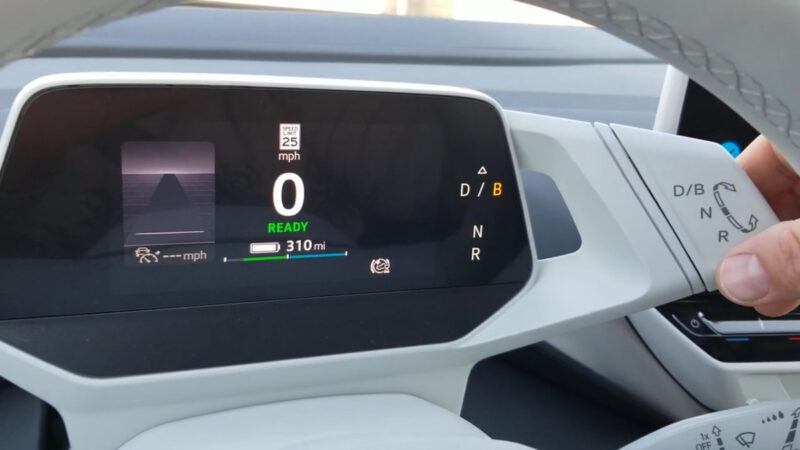
Volkswagen issued a recall affecting 60,490 vehicles because gear position may not display correctly.
Reuters covered the recall involving ID.4 vehicles from model years 2021 through 2023, while Car and Driver summarized the fix as a brake control unit software update.
What to check:
- Gear display clarity
- Documentation showing recall completion
- Practice using the parking brake on slopes
Manufacturing Bolt Torque Recall
Cars.com lists a recall affecting certain ID.4 units where bolts in areas such as chassis, brake systems, or suspension may not have been tightened correctly during manufacturing.
What to check:
- Confirm all recalls are completed
- Listen for clunks or looseness during driving
- Inspect tire wear for uneven patterns
Winter Range Drop And Slow Charging
Cold weather cuts range and charging speed for many EVs. ID.4 drivers often feel the impact more when:
- Highway speeds remain high
- Cabin heat runs heavily
- Vehicles sit outdoors overnight
Volkswagen guidance notes that cold temperatures can lengthen charging times. Older software versions also lacked some battery preheating support for fast charging, which can reduce winter charging speed.
What to check:
- Heat pump presence if living in colder regions
- Try a DC fast charge session before purchase
- Expect optimistic range estimates in winter
Climate System Quirks
Some owners report weak cooling performance in certain drive modes, and Consumer Reports still flags climate systems as a potential reliability category for the ID.4., so if the AC feels inconsistent after your test drive, it can be worth pricing out car air conditioning repairs before you buy.
What to check:
- Run AC at full cold for several minutes
- Switch between efficiency modes and normal driving
- Watch for electrical system warnings during HVAC use
Battery Degradation After 5 Years
Battery health anxiety often feels louder than reality.
Geotab’s updated 2026 dataset reports average battery degradation around 2.3% per year. At that pace, a 5-year vehicle often lands around 88% to 92% remaining capacity, depending on charging habits and climate exposure.
Volkswagen’s warranty standard sets 70% net capacity at 8 years or 100,000 miles.
Europe’s ADAC tested a Volkswagen ID model over about 107,000 miles and reported 91% remaining battery capacity.
Third-party testing suggests many ID.4 packs remain strong past 50,000 miles, with individual results shaped by charging habits.
What to check:
- Battery health report, if available
- Compare the real-world range to original ratings
- Observe DC fast charge rate behavior
Quick Reference Table
| Problem Area | What You Will Notice | Typical Impact | Common Fix |
| Infotainment and cluster resets | Black screen, delayed camera, reboots | Daily frustration, safety recall relevance | Recall software update 919A |
| Door handle water intrusion | Keyless entry problems | Safety and usability | Handle replacement and software |
| 12V charging faults | Warnings, non start, tow ins | Major inconvenience | OCDC repair |
| HV battery management resets | Sudden loss of power | Safety and drivability | HV software update |
| Gear display rollaway risk | Gear status unclear | Safety recall | Brake control software update |
| HV battery fire risk subset | Charge limits, avoid DC fast charging | Serious but rare | Battery module replacement |
Used Buyer Checklist
@redline_reviews Looking to buy your first #EV that isn’t insanely expensive or overwhelming with tech? The 2024 #VolkswagenID4 has been a solid choice for nearly 4 years, and @volkswagen is giving the latest #ID4 some upgrades this year! #VWID4 #ID4ProS #Volkswagen #VW #carsoftiktok #cartiktok #cartok
Step 1: Run The VIN For Recalls
Use Volkswagen’s recall lookup and cross check with NHTSA based listings. Documentation matters.
Step 2: Stress Test The Screens
Start and restart the vehicle. Cycle the backup camera repeatedly. Test navigation and smartphone connectivity.
Step 3: Ask About 12V History
Key questions:
- Any dead 12V events
- Any tow ins
- Any charging interruptions
Step 4: Perform Real Charging Sessions
Test Level 2 AC charging and a DC fast charge session. Walk away from vehicles that error during charging.
Step 5: Ask About Charging Habits
Daily DC fast charging does not automatically ruin a pack, yet it deserves closer inspection.
Ownership Tips After Purchase
- Keep software updates current
- Avoid storing the vehicle at 100% charge daily
- Use DC fast charging when needed rather than as routine
- Precondition the cabin while plugged in during winter
- Address door handle moisture behavior promptly
Bottom Line
A 5-year-old ID.4 can serve well when recall history remains clean, software updates sit current, charging behavior appears stable, and screen behavior stays reliable during aggressive testing.
Battery degradation rarely defines ownership at this stage. Recalls, electronics, and charging systems do.
Buy only when VIN history is clean, recall repairs are documented, charging behavior appears normal, and the screens behave predictably during a thorough test drive.