
Electric cars absolutely can be tuned. The catch is that tuning an EV does not look or feel like tuning a gas car, and that gap between expectation and reality is where most myths live.
EVs are defined by software layers that manage power delivery, efficiency, traction, and temperature all at once. That creates real opportunities for performance and efficiency changes, but it also makes exaggerated claims spread fast.
Plenty of owners hear phrases like “hidden horsepower” or “simple software unlock” and imagine a free performance upgrade waiting behind a menu. The truth in 2025 is more nuanced. Some upgrades are real, validated, and useful. Others create more risk than reward.
What follows breaks down what EV tuning actually means, which software unlocks are legitimate, which ideas are mostly hype, and how to evaluate any pitch without getting burned.
All examples and figures below reflect current EV behavior and documented manufacturer approaches as described in the attached reference.
What “Tuning” Actually Means on an Electric Car
Pressing the accelerator in an EV does not directly open anything mechanical. It sends a request. Software then decides how much torque to deliver, how quickly, and under what conditions. That decision stays inside boundaries defined by several systems working together.
That level of coordination shows why true vehicle transformation usually starts with purpose-built platforms rather than casual unlocks, https://www.expeditionmotorcompany.com/custom-g-wagon-wolf-builder/#to-fixed.
Core Systems That Define EV Performance
- Battery management system (BMS): Controls maximum discharge power, voltage limits, and temperature windows.
- Inverter and motor control: Dictates how current flows into the motor, shaping torque delivery and efficiency.
- Traction and stability logic: Reduces or redistributes torque when grip is limited, especially on dual-motor layouts.
- Thermal management: Limits power when motors or battery approach heat thresholds.
- Drive modes and pedal mapping: Changes how fast torque ramps in response to pedal input, even when peak output stays the same.
Because software coordinates all of this, performance changes are often delivered digitally. Tesla’s paid in-app upgrades and Polestar’s Performance software upgrade for the Polestar 2 are clean manufacturer examples. Eligible cars receive changes over-the-air, with defined behavior shifts and known boundaries.
Aftermarket tuning also exists. It usually relies on CAN interception, firmware modification, or behavior spoofing. That puts it directly at odds with modern vehicle cybersecurity and update integrity expectations, which matter far more on EVs than on older gas platforms.
Myth 1: Every EV Has Hidden Power Waiting to Be Unlocked
Some EV trims share hardware. Others do not. That detail matters more than any forum claim.
Where the Myth Comes From
Manufacturers sometimes use software to differentiate trims that share motors, inverters, or batteries. That fact gets stretched into a universal assumption that every EV is artificially limited.
What Actually Happens
- Some trims share hardware, but available headroom is finite.
- Many trims use different motors, inverters, cooling systems, or battery chemistry.
- Even shared hardware may be limited for durability, thermal margin, tire ratings, or product positioning.
Polestar’s Performance software upgrade illustrates the realistic case. It applies only to the Long range Dual motor version of the Polestar 2.
Power and torque increases are delivered during a defined acceleration window from 70 to 130 km/h. Output figures change, but not everywhere and not endlessly. It is presented as a performance profile adjustment, not a universal unlock.
If a seller claims a model-agnostic power release with no constraints, skepticism is healthy.
Myth 2: Software Unlocks Are Free, Instant, and Always Safe
Manufacturer-backed upgrades cost money because validation is expensive. Changing vehicle behavior involves far more than adjusting a single value.
Why OEM Upgrades Follow a Process
Manufacturers test changes across:
- Heat and cold
- Altitude variation
- Battery state-of-charge
- Aging battery packs
- Different tires and loads
- Fault scenarios and edge cases
Regulatory frameworks such as UNECE WP.29 emphasize cybersecurity and controlled software updates across the vehicle lifecycle. That environment explains why legitimate upgrades arrive through official channels, not random files.
That clarity is not accidental.
Where Risks Usually Appear
Aftermarket tuning does not automatically equal danger, but “always safe” is not a realistic baseline. Common issues include:
- Excess heat during repeated acceleration
- Increased battery stress at low temperatures
- Unexpected traction behavior on poor surfaces
- Software conflicts after over-the-air updates
- Fault conditions that OEM validation would normally catch
Failures rarely look dramatic. They show up as inconsistency, degraded performance, or denied claims later.
Myth 3: A Tune Cannot Affect Range, Charging, or Battery Health
Performance, efficiency, and battery health share the same physics. Software influences how hardware operates within those limits.
Where Software Genuinely Helps
Polestar describes a heat pump software upgrade that improves energy consumption across a temperature range from about -7°C to 25°C for vehicles equipped with the relevant hardware. That change improves real-world efficiency without altering physical components.
Rivian software updates offer another example. Reported updates added manual battery preconditioning and improved DC fast charging behavior. For specific configurations, Rivian stated peak charging speeds of up to 215 kW and the ability to add 15% of range in 15 minutes.
Those gains come from better thermal and charging management, not from inventing energy.
Where Limits Remain
- Higher available power increases energy draw during acceleration.
- Frequent use of extra power generally lowers efficiency.
- Battery stress rises when high current is requested outside ideal temperature windows.
The accurate framing looks like this:
- Software can improve efficiency and charging behavior inside hardware limits.
- Software can also increase wear if it allows higher current draw more often.
Myth 4: Tuning an EV Works Like Tuning a Gas Car
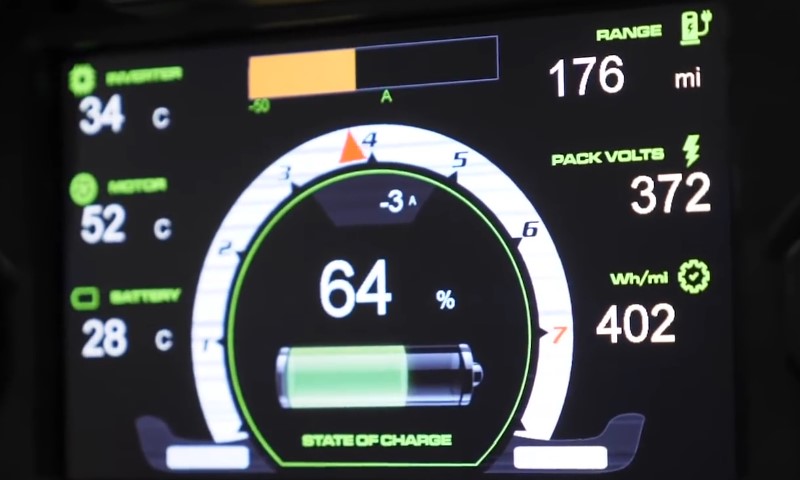
Gas tuning targets fuel, spark, boost, and transmission behavior. EV tuning targets torque requests, inverter limits, thermal strategies, and motor coordination.
Two forces make EV tuning fundamentally different.
Cybersecurity and Integrity Requirements
UNECE WP.29 work highlights cybersecurity risk and lifecycle software control. ISO and SAE standards define cybersecurity engineering requirements for road vehicles. Unauthorized changes sit directly in that threat model.
Over-The-Air Updates as Normal Operation
Tesla positions OTA updates as a routine ownership feature. Cars update themselves while parked and connected. That environment does not favor long-term stealth modifications.
The result is a moving target. Even a stable aftermarket tune today may not survive the next official update.
Myth 5: Jailbreaks and Modules Are Undetectable
Detection methods evolve. Manufacturers can look for:
- Unexpected CAN traffic patterns
- Firmware mismatches
- Integrity check failures
- Inconsistent sensor behavior
Even if a modification avoids detection initially, it can surface later due to:
- Changes in OTA handshake behavior
- More granular logging
- Deeper diagnostics during service
- Fault events triggering integrity checks
Assuming permanent invisibility is unrealistic.
Myth 6: Any Tune Automatically Voids Your Warranty
@_mythos5 Will a tune void your factory warranty? #audi #s5sportback #quattro #mytho5 #carbuild #diy
Warranty outcomes are usually claim-specific, not blanket punishments.
In the United States, the FTC explains that manufacturers cannot void a warranty solely because third-party parts or services were used. Coverage can be denied when a modification plausibly caused the failure.
Practical Implications
- Unauthorized tuning can increase the risk of denied claims tied to drivetrain, battery, or electronics.
- Manufacturer-approved upgrades typically carry the lowest warranty risk.
- Insurance policies may require disclosure if performance is materially altered.
The legal and insurance side matters just as much as technical outcomes.
Myth 7: Charging Speed and Battery Capacity Can Be Unlocked at Will
Charging behavior depends on chemistry, temperature, cooling capacity, and pack design.
Software can optimize charging curves and preconditioning behavior. It cannot rewrite thermal physics.
Rivian’s charging improvements came from better temperature management and validation, not from a hidden capacity switch.
Battery capacity unlocks exist only in narrow historical cases and niche configurations. For most drivers in 2025, charging optimization matters far more than chasing theoretical extra kilowatt-hours.
What Responsible EV Tuning Actually Looks Like
Responsible EV tuning focuses on changes that stay inside known limits and preserve reliability. It prioritizes validated software, clear documentation, and predictable behavior over quick gains that create long-term problems.
Manufacturer-Supported Software Upgrades
The safest balance between benefit and risk.
- Tesla: Paid upgrades purchased through the app and installed over-the-air for eligible configurations.
- Polestar 2: Performance software upgrade for Long-range Dual motor models, with defined output changes and stated warranty implications.
Manufacturer Updates That Improve Ownership Experience
Often overlooked because they do not sound exciting.
- Rivian software updates improving charging experience, manual preconditioning, and DC fast charging behavior.
- Polestar heat pump software improving energy consumption across a defined temperature range.
User-Accessible Settings That Already Act Like Tuning
Many EVs already offer meaningful adjustments:
- Regenerative braking strength
- Pedal response modes
- Stability control behavior, including track modes where available
- Battery preconditioning controls
- Torque distribution preferences on some dual-motor setups
Hardware Changes for Repeatable Performance
For consistent results rather than peak numbers:
- Tires with appropriate grip and load ratings
- Brake pads and fluid designed for higher heat
- Alignment adjustments within safe specifications
- Cooling-related upgrades where manufacturer-supported
Quick Myth-To-Reality Table
How to Evaluate Any Software Unlock Pitch
Ignore hype and apply a checklist.
What Exactly Changes?
Peak power, torque curve, pedal mapping, thermal limits, charging behavior.
Where Is the Proof?
Repeatable testing under identical conditions, including state-of-charge and ambient temperature.
How Does It Behave After Multiple Pulls?
Heat soak exposes the real story quickly.
What Happens After Ota Updates?
Manufacturer updates may disable or detect modifications.
What Happens During Service?
If removal or reversion is required, detection risk exists.
What Is the Downside if It Fails?
Denied claims, drivability issues, charging problems, or accelerated battery wear.
The Bottom Line
Electric cars can be tuned, but not in the fantasy sense promised by shortcuts and universal unlocks. Software matters enormously, yet it operates inside physical, thermal, and regulatory boundaries that do not bend for marketing claims.
Manufacturer-supported upgrades and well-documented efficiency improvements deliver real value. Unverified hacks often trade short-term excitement for long-term risk.
Treat EV tuning like any other serious modification. Know what changes, why it works, and what it costs when it does not.